Ads in ChatGPT? I Barely Noticed Them - A Gen-Z Perspective

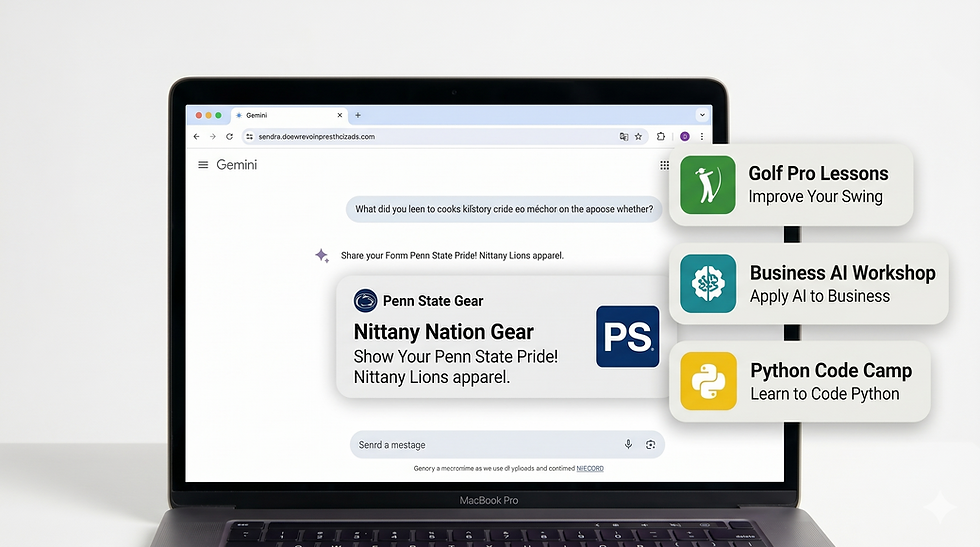
In February of 2026, OpenAI started testing ads in ChatGPT for logged-in users on Free and Go plans. And since then, OpenAI announced it’s expanding its ads pilot to additional countries. So one thing is for sure, more and more people will be seeing ads in ChatGPT.
Below, I wanted to provide a Gen-Z perspective about ads running ChatGPT. I know OpenAI said that "the initial results are encouraging and there is no impact on consumer trust", but I wanted to speak up as a Gen-Z user. I’m not sure I have seen many public statements about that yet, so here it is.
My Initial Reaction: Where are the ads??
As of now, ChatGPT ads show up at the bottom of responses, and to be honest, I initially had no clue ads were even there. Since they were at the bottom of an answer, I sort of missed them… So for companies running ads trying to target me, just know I had no idea those ads were there. I didn’t really see them and I didn’t engage with them at all.

Gen-Z Is Used To Seeing Ads, But We Are Also Over Them…
My generation lives online, from Instagram to Snapchat to TikTok, we are always active online. Gen-Z is known as the first digital generation, so honestly, ads feel like a normal part of our lives. However, this does not mean we tolerate them well.
Ads can be both good and bad in my opinion. It just depends on how the actual user feels about their implementation. If I see an ad on my phone, and the ad takes up the entire screen and makes me interact for 15 seconds before I can skip it, it pisses me off.
My ChatGPT Ads Test:
To test ads within ChatGPT, I thought of two questions potential college students would ask. I wanted to use a basic question relating to clothing or necessities for a student, and then a question that is related more to schoolwork. I mainly wanted to see if ads were relevant to my prompts. In addition, I wanted to see how they were presented, where they were presented, and if they could get me to click through.
My Prompts
To see how these ads change and how they are presented, I prompted ChatGPT with two different prompts:
- What are the best shoes for an active college student?
- What are the best AI certification classes to take?
The Results: What are the best shoes for an active college student?
Being at a huge campus like Penn State, students end up walking a lot. The ChatGPT answer provided a number of products to review. And being able to make comparisons between five different shoes and brands is really interesting and saves a lot of time for busy students.
And then there was the ad…
The ad at the end of the response directed me to Urban Outfitters. So the ad was pretty targeted and Urban Outfitters does provide shoes. And I would actually click through if the ChatGPT answer didn’t provide the best results. But, I thought the answer did provide solid results so I’m not sure I would click through.
Then I asked my friends if they would click through the ad at the end of response and most of them said... maybe. Like me, they explained that if the response ChatGPT provided did not give them recommendations they liked, they might click through the ad at the bottom and look through the website.

More Results: What are the best AI certification courses to take?
This prompt generated an ad at the bottom of the answer for Coursera where students can enroll in Stanford-level machine learning specialization courses. The ad was very targeted based on my prompt. The actual ChatGPT answer was helpful as well, explaining the best low-to-high commitment programs. So again, I’m not sure I would click through if the answer provided what I needed. If it didn’t, then I could see clicking through to learn more about the course.
So, the ad at the end of the ChatGPT response was interesting, but reading the ChatGPT answer made me wonder why people would not just go directly through that response and find a course that way versus clicking the ad at the end. In other words, the ChatGPT response was solid and I’m not sure I would click through the ad.

Does Gen-Z Actually Click Through?
This is a complicated question because it truly depends on the situation. In some scenarios, it makes sense to click ads in ChatGPT, but only if the answer isn’t providing what we need. When prompting AI for shopping recommendations, I believe some would click through to the actual website from an ad. When I polled my friends, several said that they would click through these types of ads to be able to shop on the actual website. So for shopping, I can see more Gen-Z users clicking through ads.
However, there are many scenarios where Gen-Z students would probably just look past ChatGPT ads. So if the ChatGPT answer was great, then why click through the ads? I heard this from several of my friends at Penn State.
Why Do Ads Need to Be Relevant? Let Google Explain.
Bernard Marr, an expert on AI and machine learning, published a video with Nick Fox, Google’s SVP of Search about ads in AI experiences. This video explicitly covered how ads within AI need to be clearly labeled and separated from the AI answer. And needless to say, Google has ton of experience running the most successful advertising platform on the planet.
In the video, Nick explained that an important philosophy for Google is that ads need to stay relevant. He explained that the secret to Google's business over time is that once ads can become relevant, they perform well for users. So, in AI experiences on Google, relevance is key.
Here is the video segment with Nick (at 16:25 in the video):
So in my opinion, for ads to work in ChatGPT, there must be a clear distinction between the AI response and ads. If users feel the answers are influenced by advertisers, they will lose trust in the responses. And that would be the kiss of death for ChatGPT. And for Gen-Z, the backlash could be severe for OpenAI. But on the flip side, if the answers are solid, and completely independent from the ads running, then users could trust the response and possibly click through the ads if they are relevant and helpful.
When Could ChatGPT Ads Become a Problem?
In my opinion, the current form of ChatGPT ads are fine. They are located at the bottom of the response where people can completely ignore them if they want to. And if the answer doesn’t provide everything you need, and the ad is relevant, then some will choose to click through. I think ChatGPT ads could become problematic if the responses were somehow sponsored by advertisers. Then I would lose trust in the answers. I also wouldn’t like it if there were too many ads. For example, if ads started showing up at the top, along the side, and at the bottom of the response. That would be super annoying. But again, for now they are fine.
In the end, ads in ChatGPT don't really bother me and my friends. They are just sort of... there. In my opinion, college students will most likely continue to look past ChatGPT ads and pay little attention to them. That said, if the ads evolve and can really help us, then maybe we would engage with them more. But as of now, we sort of look past them most of the time.
I’m eager to see how ChatGPT ads evolve.
Comments